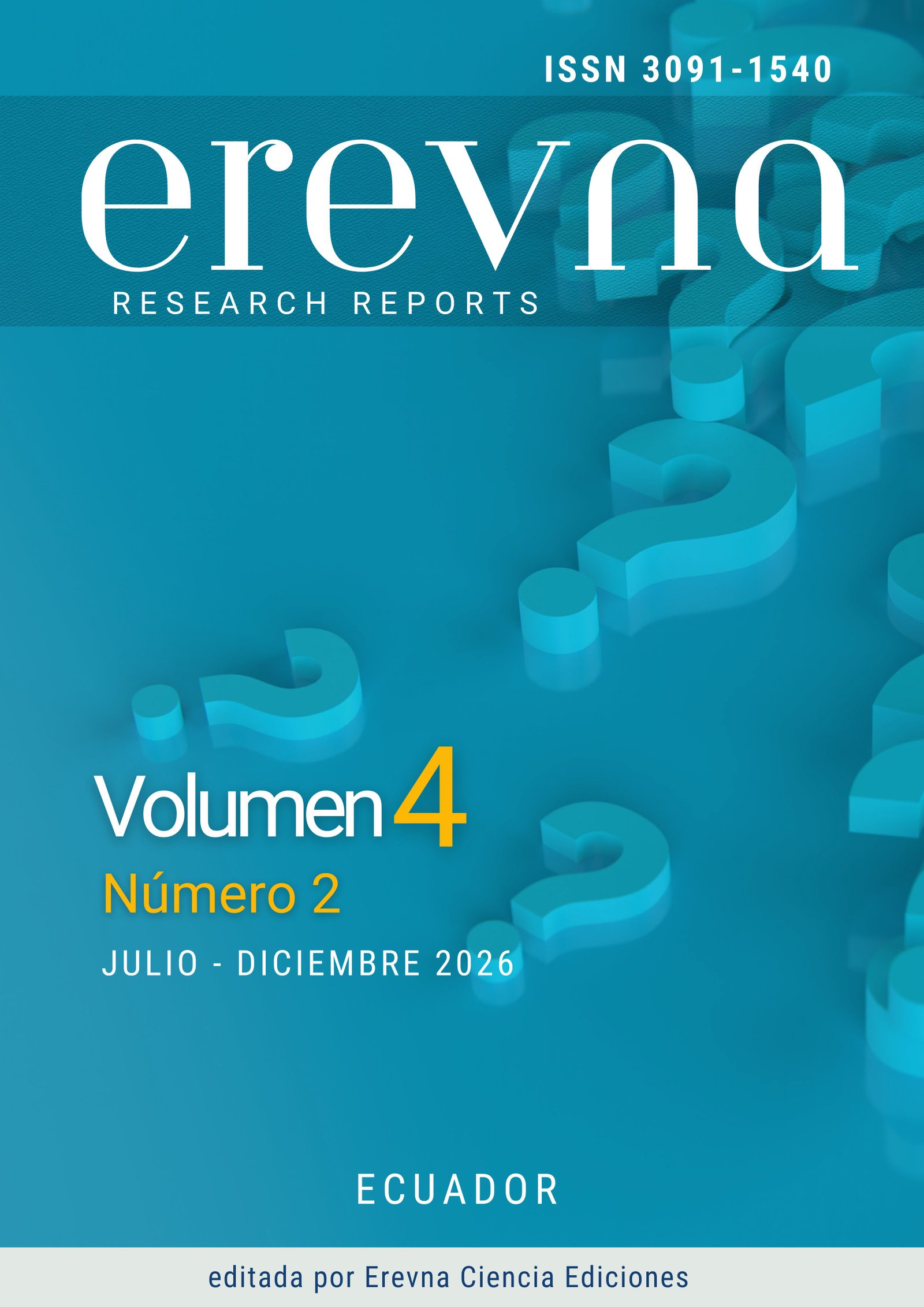
Innovative Methodologies for Teaching Natural Sciences in Basic General Education: A Systematic Review
DOI:
https://doi.org/10.70171/6byqry92Keywords:
active learning, educational innovation, pedagogical strategiesAbstract
Justification: The teaching of Natural Sciences requires instructional approaches that foster the understanding of phenomena and the development of scientific skills, which has increased interest in methodologies aimed at a more active construction of knowledge. Objective: To identify the innovative methodologies applied to the teaching of Natural Sciences in Basic General Education in Ecuador and synthesize the results obtained from their implementation. Methodology: A systematic literature review was conducted following the PRISMA 2020 guidelines. Twenty-eight empirical studies conducted in Ecuador were included, and their data were examined through descriptive and narrative synthesis. Results: Gamification was the most frequently used methodology (42.9%), followed by the flipped classroom (21.4%) and project-based learning (14.3%), along with other less frequently used methodologies. In studies using pretest-posttest measurements, gamification yielded an average increase of 1.66 points. In addition, the methodologies analyzed showed favorable results in content comprehension, scientific skills, critical thinking, problem-solving, motivation, participation, autonomy, and collaboration. Conclusion: The synthesized evidence supports the incorporation of innovative methodologies as alternatives for broadening approaches to learning Natural Sciences in Basic General Education; however, differences in research designs and learning assessment still prevent determining which methodology is most appropriate for the specific learning outcomes to be developed.
Downloads
References
Aguinsaca-González, J. L., & Álvarez-Lozano, M. I. (2021). Aprendizaje Basado en Proyectos una propuesta de enseñanza para Ciencias Naturales en Educación General Básica. Episteme Koinonía, 4(1), 175-191. https://doi.org/10.35381/e.k.v4i1.1461 DOI: https://doi.org/10.35381/e.k.v4i1.1461
Alarcón Campas, R. M., Meca Ríos , V. N., Guachizaca Vera, Z. V., & Navarro Tenorio, S. J. (2026). Gamificación con Genially para el fomento del aprendizaje activo en Ciencias Naturales en estudiantes de educación primaria. Código Científico Revista De Investigación, 7(E1), 544–560. https://doi.org/10.55813/gaea/ccri/v7/nE1/1307 DOI: https://doi.org/10.55813/gaea/ccri/v7/nE1/1307
Anzano-Oto, S., Latorre-Cosculluela, C., Sierra-Sánchez, V., & Mallén-Berdejo, M. (2026). Innovation, Active Methodologies, and Educational Transformation: A Qualitative Analysis of Teachers’ Perceptions. Improving Schools, 28(2), 540-561. https://doi.org/10.1177/13654802261451027 DOI: https://doi.org/10.1177/13654802261451027
Bernal Párraga, A. P., Constante Olmedo, D. F., López Sánchez, I. Y., Padilla Portocarrero, D. K., & Duarte Salinas, E. M. (2026). Ecosistema híbrido inteligente para la enseñanza de Ciencias Naturales: un modelo integrador de metodologías activas, IA y regulación emocional. Tesla Revista Científica, 6(1). https://doi.org/10.55204/trc.v6i1.e588 DOI: https://doi.org/10.55204/trc.v6i1.e588
Bjerknes, A. L., Wilhelmsen, T., & Foyn-Bruun, E. (2024). A systematic review of curiosity and wonder in natural science and early childhood education research. Journal of Research in Childhood Education, 38(1), 50-65. https://doi.org/10.1080/02568543.2023.2192249 DOI: https://doi.org/10.1080/02568543.2023.2192249
Bruner, J. S. (1961). The act of discovery. Harvard educational review.
Caballero Meneses, S. Y., Vergara Causo, E. S. ., Gardi Melgarejo, V. ., & Rodriguez-Barboza, J. R. . (2025). Metodologías activas en la educación latinoamericana: una revisión sistemática sobre su impacto en el aprendizaje significativo. Revista InveCom ISSN En línea: 2739-0063, 6(2), 1-9. https://doi.org/10.5281/zenodo.16076292
Cabrera López, OG, López Samaniego, FI, Rodríguez Torres, Ángel F., & Ortiz Aguilar, W. (2025). Fortalecimiento de las habilidades de investigación científica mediante el aprendizaje invertido: un estudio cuasiexperimental en educación primaria. MENTOR Revista De investigación Educativa Y Deportiva, 4 (12), 387–416. https://doi.org/10.56200/mried.v4i12.10181 DOI: https://doi.org/10.56200/mried.v4i12.10181
Cango Cango, M. V., Saavedra Pardo, L. de L., Medina León, A., Maridueña-Arroyave, M. R., & Castillo-Delgado, E. K. (2025). La gamificación en entornos digitales como estrategia para mejorar la motivación y el aprendizaje en estudiantes de educación básica media. Código Científico Revista De Investigación, 6(E2), 18–38. https://doi.org/10.55813/gaea/ccri/v6/nE2/1014 DOI: https://doi.org/10.55813/gaea/ccri/v6/nE2/1014
Cedeño Zambrano, G. A., Maliza Muñoz, W. F., Medina León, A., & Vera Mora, G. R. (2021). Flipped Clasroom y su efectividad en Moodle. Journal of Science and Research, 6(3), 290–309. https://doi.org/10.5281/zenodo.5659878
Chen, F., & Chen, G. (2025). Learning analytics in inquiry-based learning: a systematic review. Educational technology research and development, 73(4), 2131-2161. https://doi.org/10.1007/s11423-025-10507-9 DOI: https://doi.org/10.1007/s11423-025-10507-9
Chicaiza-Aman, P. D. P., Llambo-Fuérez, J. del R., Bravo-Cedeño, C. D. P., & Delgado-Quijije, F. C. (2024). Innovación pedagógica e inclusión educativa: Impacto del aula invertida en la diversificación del aprendizaje en la educación básica. Polo del Conocimiento, 9(12), 820–844. https://doi.org/10.23857/pc.v9i12.8516
Conde-Izquierdo, S., Ruano, A. M., & Nicolas, D. P. (2025). The impact of active methodologies in the classroom on academic achievement: A systematic literature review using the PRISMA protocol. International Journal of Educational Research, 132, 102644. https://doi.org/10.1016/j.ijer.2025.102644 DOI: https://doi.org/10.1016/j.ijer.2025.102644
Contreras-Alvear, I. E., Maridueña-Loor, M. P., & Massuh-Villavicencio, C. M. (2025). Gamificación con Wordwall: Aprendizaje significativo en Ciencias Naturales en la Educación Básica. Revista Ciencias Pedagógicas e Innovación, 13(2), 35-44. https://doi.org/10.26423/a4mnfh56 DOI: https://doi.org/10.26423/a4mnfh56
DeFillippi, R. J. (2001). Introduction: Project-based learning, reflective practices and learning. Management learning, 32(1), 5-10. https://doi.org/10.1177/1350507601321001 DOI: https://doi.org/10.1177/1350507601321001
Dewi, C. A., & Rahayu, S. (2023). Implementation of case-based learning in science education: A systematic review. Journal of Turkish Science Education, 20(4), 729-749. https://doi.org/10.36681/tused.2023.041 DOI: https://doi.org/10.36681/tused.2023.041
Díaz-Pinargo, B. I., Comina-Fonseca, H. S., & Vergel-de Salazar, E. E. (2024). Aula invertida: metodología para potenciar el aprendizaje significativo en Ciencias Naturales en Educación General Básica. Revista Mexicana de Investigación e Intervención Educativa, 3(3), 11-25. https://doi.org/10.62697/rmiie.v3i3.103 DOI: https://doi.org/10.62697/rmiie.v3i3.103
Doğan, Y., Batdı, V., & Yaşar, M. D. (2023). Effectiveness of flipped classroom practices in teaching of science: a mixed research synthesis. Research in Science & Technological Education, 41(1), 393-421. https://doi.org/10.1080/02635143.2021.1909553 DOI: https://doi.org/10.1080/02635143.2021.1909553
Faneite, S. F. A., & Barrios, M. (2023). La enseñanza contextualizada para el aprendizaje de las Ciencias Naturales. Revista de la Universidad del Zulia, 14(40), 103-126. https://doi.org/10.46925/rdluz.40.06 DOI: https://doi.org/10.46925//rdluz.40.06
Gaona-Jiménez, J. M., Becerra-García, E. B., Ordoñez-Viera, E. S., & Cabezas-Bastidas, S. M. (2024). El juego como estrategia didáctica para el logro de aprendizajes significativos en ciencias naturales en tercer año de educación básica. KIRIA: Revista Científica Multidisciplinaria, 2(3), 1-13. https://doi.org/10.53877/803eey98 DOI: https://doi.org/10.53877/803eey98
Gomez, M. J. (2025). The impact of inquiry-based learning in science education: A systematic review of student engagement and achievement. Journal of Education, Learning, and Management, 2(2), 353-363. https://doi.org/10.69739/jelm.v2i2.1143 DOI: https://doi.org/10.69739/jelm.v2i2.1143
González López, A. M., Pascual Sevillano, M. Á., & Sorzio, P. (2025). Use of active methodologies in basic education: An umbrella review. Education Sciences, 15(11), 1536. https://doi.org/10.3390/educsci15111536 DOI: https://doi.org/10.3390/educsci15111536
Gopalan, M., Rosinger, K. O., & Ahn, J. B. (2020). Use of quasi-experimental research designs in education research: Growth, promise, and challenges. Review of Research in Education, 44(1), 218–243. https://doi.org/10.3102/0091732X20903302 DOI: https://doi.org/10.3102/0091732X20903302
Granda-Herrera, G., Lizano-Moreno, L. L., Cofre-Medina, J. R., & Ramírez-Vargas, M. E. (2026). Influencia de estrategias didácticas activas en indagación científica de estudiantes de educación básica en Ecuador. Simbiosis, 6(15), 1-19. https://doi.org/10.59993/simbiosis.V.6i15.145 DOI: https://doi.org/10.59993/simbiosis.V.6i15.145
Guillén-Mendoza, S. V., Solórzano-Cobeña, C. M., Prado-Carpio, E. C., Giler-Sánchez, M. S., & Rivera, E. E. V. (2025). Metodologías activas en la educación superior: Estrategias para el aprendizaje significativo. https://doi.org/10.70171/yw2j4p08 DOI: https://doi.org/10.70171/yw2j4p08
Hmelo-Silver, C. E. (2004). Problem-based learning: What and how do students learn?. Educational psychology review, 16(3), 235-266. https://doi.org/10.1023/B:EDPR.0000034022.16470.f3 DOI: https://doi.org/10.1023/B:EDPR.0000034022.16470.f3
Ibarra, G., & Bernal, A. (2018). Análisis documental de las Metodologías de Enseñanza. Revista Electrónica Desafíos Educativos-Redeci, 2(4), 38-53. https://revista.ciinsev.com/assets/pdf/revistas/REVISTA4/3.pdf
Intriago-Zambrano, D. A., Huatatoca-Chimbo, L., Vasconcellos, N., & Pérez, O. M. (2025). ABP como fortalecedor del conocimiento en materias básicas de la Unidad Educativa Básica Eloy Alfaro. Revista Panamericana de Pedagogía, (40). https://doi.org/10.21555/rpp.3367 DOI: https://doi.org/10.21555/rpp.3367
Kaptan, K., & Timurlenk, O. (2012). Challenges for science education. Procedia-Social and Behavioral Sciences, 51, 763-771. https://doi.org/10.1016/j.sbspro.2012.08.237 DOI: https://doi.org/10.1016/j.sbspro.2012.08.237
Krajcik, J., Schneider, B., Miller, E. A., Chen, I. C., Bradford, L., Baker, Q., ... & Peek-Brown, D. (2023). Assessing the effect of project-based learning on science learning in elementary schools. American Educational Research Journal, 60(1), 70-102. https://doi.org/10.3102/00028312221129247 DOI: https://doi.org/10.3102/00028312221129247
Kurt, G., & Akoglu, K. (2023). Project-based learning in science education: A comprehensive literature review. Interdisciplinary Journal of Environmental and Science Education, 19(3), e2311. https://doi.org/10.29333/ijese/13677 DOI: https://doi.org/10.29333/ijese/13677
Lamanauskas, V. (2022). Natural science education in primary school: Some significant points. Journal of Baltic Science Education, 21(6), 908-910. https://doi.org/10.33225/jbse/22.21.908 DOI: https://doi.org/10.33225/jbse/22.21.908
Ledoux, S. F. (2002). Defining natural sciences. Behaviorology Today, 5(1), 34-36. https://behaviorology.org/oldsite/pdf/DefineNatlSciences.pdf
Leite, C. (2023). Teachers of natural sciences: some challenges and perspectives in Brazil. In 9th International Conference on Higher Education Advances (HEAd'23). Editorial Universitat Politècnica de València (pp. 835-841). http://dx.doi.org/10.4995/HEAd23.2023.16347 DOI: https://doi.org/10.4995/HEAd23.2023.16347
Llivicura Nivelo, M. L., Cárdenas Rojas, J. M., & Naranjo Vaca, G. E. (2026). Gamificación como Estrategia Didáctica para Mejorar el Aprendizaje de Ciencias Naturales en Cuarto Grado de Educación Básica. (2026). Identidad Bolivariana, 10, 821-830. https://doi.org/10.37611/IB10ol821-830 DOI: https://doi.org/10.37611/IB10ol821-830
López Sánchez, I. Y., Heras Heras, S. P., Flores Palma, V. E., & Andrade Avilés, W. A. (2026). Uso de materiales concretos y metodologías activas para la enseñanza de ciencias naturales en estudiantes de educación general básica. Polo del Conocimiento, 11(7), 2796–2821. https://doi.org/10.23857/pc.v11i7.12170 DOI: https://doi.org/10.23857/pc.v11i7.12170
Lotter, L., & Ramnarain, U. (2025). An exploratory study on the use of a flipped classroom model for supporting inquiry-based learning in natural sciences classrooms. African journal of research in mathematics, science and technology education, 29(1), 99-112. https://doi.org/10.1080/18117295.2024.2428554 DOI: https://doi.org/10.1080/18117295.2024.2428554
Loyens, S. M. M., van Meerten, J. E., Schaap, L., & Wijnia, L. (2023). Situating higher-order, critical, and critical-analytic thinking in problem- and project-based learning environments: A systematic review. Educational Psychology Review, 35(2), Article 39. https://doi.org/10.1007/s10648-023-09757-x DOI: https://doi.org/10.1007/s10648-023-09757-x
Ma, Y. (2023). Exploration of flipped classroom approach to enhance critical thinking skills. Heliyon, 9(11). https://doi.org/10.1016/j.heliyon.2023.e20895 DOI: https://doi.org/10.1016/j.heliyon.2023.e20895
Mallitasig Sangucho, A. J., & Freire Aillón, T. M. (2020). Gamificación como técnica didáctica en el aprendizaje de las Ciencias Naturales. INNOVA Research Journal, 5(3), 164–181. https://doi.org/10.33890/innova.v5.n3.2020.1391 DOI: https://doi.org/10.33890/innova.v5.n3.2020.1391
Milman, N. B. (2012). The flipped classroom strategy: What is it and how can it best be used?. Distance learning, 9(3), 85-87. https://doi.org/10.1108/DL-09-2012-0010 DOI: https://doi.org/10.1108/DL-09-2012-0010
Ministerio de Educación del Ecuador. (2016). Currículo de los niveles de educación obligatoria: Ciencias Naturales. Ministerio de Educación. https://educacion.gob.ec/wp-content/uploads/downloads/2016/08/CCNN-completo.pdf?utm_source=chatgpt.com
Molina Molina, M. C., Mayorga Román, M. G., Guerrero Chasi, P. R., Gómez Yánez, B. M., & Toro Ruiz, L. J. (2025). Impacto de los entornos digitales interactivos en el aprendizaje significativo de Ciencias Naturales en Educación Básica. Revista Científica Internacional Arandu UTIC, 12(3), 3415–3431. https://doi.org/10.69639/arandu.v12i3.1565 DOI: https://doi.org/10.69639/arandu.v12i3.1565
Molnár, Z., Gyuris, Á., Radács, M., Nemes, P., Bátori, I., & Gálfi, M. (2023). Complex natural science and the challenges of its education in the 21st century. Cogent Education, 10(2), 2240166. https://doi.org/10.1080/2331186X.2023.2240166 DOI: https://doi.org/10.1080/2331186X.2023.2240166
Moreira Castro, J. D., & Castro Carreño, N. I. (2025). Gamificación en ciencias naturales: Impacto en la motivación y el rendimiento académico en estudiantes de educación básica elemental y media. Revista Pertinencia Académica, 9(4), 141–162. https://doi.org/10.5281/zenodo.18774002
Ofosu-Ampong, K. (2020). The shift to gamification in education: A review on dominant issues. Journal of Educational Technology Systems, 49(1), 113-137. https://doi.org/10.1177/0047239520917629 DOI: https://doi.org/10.1177/0047239520917629
Orejuela Medranda, H. O., Pacheco Castro, S. J., Laurencio Rodríguez, K., & Alzate Peralta, L. A. (2025). Gamificación en la enseñanza aprendizaje de las Ciencias Naturales: Estrategia metodológica para un aprendizaje significativo. Maestro y Sociedad, 22(4), 4124–4137. https://maestroysociedad.uo.edu.cu/index.php/MyS/article/view/7403
Page, M. J., McKenzie, J. E., Bossuyt, P. M., Boutron, I., Hoffmann, T. C., Mulrow, C. D., ... & Moher, D. (2021). The PRISMA 2020 statement: an updated guideline for reporting systematic reviews. bmj, 372. https://doi.org/10.1136/bmj.n71 DOI: https://doi.org/10.1136/bmj.n71
Pangestu, K., Malagola, Y., Robbaniyah, I., & Rahajeng, D. (2024). The influence of project based learning on learning outcomes, creativity and student motivation in science learning at elementary schools. Jurnal Prima Edukasia, 12(2), 194-203. https://doi.org/10.21831/jpe.v12i2.63208 DOI: https://doi.org/10.21831/jpe.v12i2.63208
Piaget, J., & Duckworth, E. (1970). Epistemología genética. American Behavioral Scientist , 13 (3), 459-480. https://doi.org/10.1177/000276427001300320 DOI: https://doi.org/10.1177/000276427001300320
Pillaga Guamán, L., Garcia-Herrera, D. G., Cárdenas-Cordero, N. M., & Erazo-Álvarez, J. C. (2020). Aprendizaje basado en problemas una estrategia de enseñanza en la asignatura de Ciencias Naturales. Revista Arbitrada Interdisciplinaria Koinonía, 5(1), 351–369. https://doi.org/10.35381/r.k.v5i1.787 DOI: https://doi.org/10.35381/r.k.v5i1.787
Plaza Ponte, J. A., Mora Romero, J. L., Medina León, A., & Maliza Muñoz, W. F. (2022). Herramienta flipped classroom: Estrategia didáctica en Ciencias Naturales de cuarto de básica. Uniandes EPISTEME. Revista Digital de Ciencia, Tecnología e Innovación, 9(1), 86–100. https://revista.uniandes.edu.ec/ojs/index.php/EPISTEME/article/view/2188
Posso-De-la-Cruz, A. E., Angulo-Cerezo, M. I., Maliza-Muñoz, W. F., & Bernardes-Carballo, K. (2025). Gamificación implementada en Quizziz como estrategia de aprendizaje activo en Ciencias Naturales. Unidad Educativa Academia Militar “San Diego. Revista Científica Zambos, 4(2), 87-100. https://doi.org/10.69484/rcz/v4/n2/109 DOI: https://doi.org/10.69484/rcz/v4/n2/109
Prince, J. D. (2013). Gamification. Journal of Electronic Resources in Medical Libraries, 10(3), 162-169. https://doi.org/10.1080/15424065.2013.820539 DOI: https://doi.org/10.1080/15424065.2013.820539
Quezada Nole, S. M., Granizo López, D. A., López Collazo, Z. S., & García Cobas, R. (2025). La gamificación como estrategia didáctica para niños con trastorno por déficit de atención en el área de ciencias naturales. ConcienciaDigital, 8(1), 160–185. https://doi.org/10.33262/concienciadigital.v8i1.3350 DOI: https://doi.org/10.33262/concienciadigital.v8i1.3350
Rai, K., & Gurung, D. J. (2026). Gamification in Science Education: Mapping a decade of research through Bibliometric analysis. Research in Science & Technological Education, 1-28. https://doi.org/10.1080/02635143.2026.2613431 DOI: https://doi.org/10.1080/02635143.2026.2613431
Revelo Ger, G. Z., Moya Bonilla, N. C., & Guaycha Cruz, E. (2024). Implementación de Aprendizaje Basado en Proyectos en la asignatura de Ciencias Naturales. Arcanum, 2(2), 21–30. https://doi.org/10.53877/xem3wm97 DOI: https://doi.org/10.53877/xem3wm97
Rochina Quinatoa, N. I., & Villao Orellana, E. J. (2026). El aprendizaje por indagación y su impacto en el rendimiento académico en ciencias naturales en estudiantes de educación general básica. ASCE Magazine, 5(1), 2297–2316. https://doi.org/10.70577/asce.v5i1.701 DOI: https://doi.org/10.70577/asce.v5i1.701
Ruiz Mena, V. M., Intriago Mejía, J. L., Gualan Vega, S. P., Demera Moreira, M. V., & Cando Cardenas, F. M. (2026). Relación entre las metodologías activas y el aprendizaje de Ciencias Naturales en estudiantes de Educación General Básica. Saber Estratégico Internacional, 4(3), 602–619. https://doi.org/10.70577/s.e.v4i3.71 DOI: https://doi.org/10.70577/s.e.v4i3.71
Silva, C., de Araújo, M. C. F., Moises, R. M. M., do Nascimento, J. E. T., Silva, F. M. M., Lima, G. F., ... & Mota, L. M. G. L. (2026). Exploring the impact of active methodologies in teaching natural sciences and their implications for meaningful learning: an integrative review on innovative strategies in science education. Revista Interdisciplinar em Ciências da Saúde e Biológicas, 10(1), 1-17. https://doi.org/10.31512/ricsb.v10i1.2282 DOI: https://doi.org/10.31512/ricsb.v10i1.2282
Soriano-Sánchez, J. G., Quijano López, R., & Airado Rodríguez, D. (2026). The impact of game-based learning on motivation, self-efficacy, and academic achievement in the natural sciences: A meta-analysis. Education sciences, 16(1), 122. https://doi.org/10.3390/educsci16010122 DOI: https://doi.org/10.3390/educsci16010122
Surya, Y. F., Atmoko, A., Nusantara, T., Masfufha, A., & Sumianto, S. (2025). The effectiveness of problem-based learning in enhancing reflective-critical thinking skills of elementary school students in science learning. Journal of Integrated Elementary Education, 5(2), 323-338. https://doi.org/10.21580/jieed.v5i2.28077 DOI: https://doi.org/10.21580/jieed.v5i2.28077
Turan, Z. (2023). Evaluating whether flipped classrooms improve student learning in science education: A systematic review and meta-analysis. Scandinavian Journal of Educational Research, 67(1), 1-19. https://doi.org/10.1080/00313831.2021.1983868 DOI: https://doi.org/10.1080/00313831.2021.1983868
Villegas Mejía, H. H., Caballero Flores, N. G., Bedón Herrera, D. G., & Zambrano Ruiz, M. L. (2026). Huertos escolares como laboratorios vivos para la enseñanza de las ciencias naturales, la ecología y los ciclos biogeoquímicos. Revista Ciencia Innovadora, 4(3), e2026244. https://doi.org/10.64422/rci.v4n3.2026.244 DOI: https://doi.org/10.64422/rci.v4n3.2026.244
Vygotsky, L. S. (1978). Mind in Society: The Development of Higher Psychological Processes. Harvard University Press.
Zambrano Barreiro, Y. E., Demera Véliz, L. E., Parreño Sánchez, J. del C., & Alzate Peralta, L. A. (2025). Gamificación con Kahoot como una estrategia didáctica en el proceso de enseñanza aprendizaje de Ciencias Naturales. Ciencia y Educación, 6(6.1), 619–632. https://doi.org/10.5281/zenodo.17075162
Zambrano-Vera, M. R., Alcívar-Williams, M. P., & Vergel-Parejo, E. E. (2024). Implementación de la gamificación en el aprendizaje de conceptos de Ciencias Naturales y su influencia en la motivación de los estudiantes. Revista Metropolitana de Ciencias Aplicadas, 7(3), 127–139. https://doi.org/10.62452/2sfnxh53 DOI: https://doi.org/10.62452/2sfnxh53
Zourmpakis, A. I., Kalogiannakis, M., & Papadakis, S. (2023). Adaptive gamification in science education: An analysis of the impact of implementation and adapted game elements on students’ motivation. Computers, 12(7), 143. https://doi.org/10.3390/computers12070143 DOI: https://doi.org/10.3390/computers12070143
Downloads
Published
Issue
Section
Categories
License
Copyright (c) 2026 Manuel Jesús Sacón-Zambrano, Yelena Dolores Solórzano-Mendoza (Autor/a)

This work is licensed under a Creative Commons Attribution-NonCommercial-ShareAlike 4.0 International License.
How to Cite




















 Correo Electrónico: editor@revistaerevna.com
 Teléfono: +593 98 096 3706
 Ubicación: Av. Río Toachi y Calle los Bambúes, Santo Domingo de los Tsáchilas, Ecuador. A. P. 230104